
For a few years, a federal tax credit helped many homeowners pay for a new heat pump. If you are shopping for one now, you may still see ads or older articles that mention it. Here is where things stand for a homeowner in late 2026.
This post is general information, not tax advice. Tax rules are complicated and can change. Please talk with a tax professional about your own situation.
The Short Answer
The federal Energy Efficient Home Improvement Credit, often called the 25C credit, is no longer available for heat pumps installed in 2026.
A 2025 federal law, Public Law 119-21, commonly known as the One Big Beautiful Bill Act, ended the credit early. According to the IRS, the credit will not be allowed for any property placed in service after December 31, 2025. Before that law, the credit had been scheduled to run through 2032.
What the Credit Used to Cover
From 2023 through 2025, the 25C credit let homeowners claim 30 percent of the cost of qualifying improvements, with annual limits. The IRS lists a limit of $2,000 per year for qualified heat pumps, heat pump water heaters, biomass stoves and biomass boilers combined. Other improvements, such as certain insulation, windows and doors, had separate, smaller limits.
The equipment also had to meet efficiency requirements, and for property placed in service in 2025, it had to come from a qualified manufacturer with an identification number reported on the tax return.
What "Placed in Service" Means for You
The cutoff is based on when the equipment was placed in service, which generally means installed and ready to use. It is not based on when you signed a contract or paid a deposit.
For a related credit, the residential clean energy credit (25D), the IRS has said an expenditure is treated as made when installation is completed, even if you paid earlier. The 25C rules use the placed-in-service test. If your heat pump was paid for in late 2025 but installed in January 2026, ask a tax professional before assuming you can claim anything.
If You Installed a Heat Pump in 2025
If a qualifying heat pump was installed and running by December 31, 2025, the credit may still apply on your 2025 federal return, using IRS Form 5695. If you already filed and did not claim it, a tax professional can tell you whether amending your return makes sense.
Keep your invoice, the manufacturer's paperwork and proof of the installation date.
What About Geothermal and Solar?
The residential clean energy credit (25D), which covered things like geothermal heat pumps and solar panels, also ended for expenditures made after December 31, 2025. If you see a 2026 ad promising a federal credit on any of these, ask the seller for the source.
What Incentives Are Still Out There?
Losing the federal credit doesn't mean you are on your own. Here is what to check in the Tulsa area:
- Utility rebates. PSO's Power Forward program lists rebates for qualifying heat pumps, central air conditioners, mini-splits and tune-ups. ONG offers rebates on high-efficiency gas furnaces. OG&E's programs have changed during 2026, so check current status. Programs change often, so confirm eligibility before you buy.
- State programs. The Oklahoma Department of Commerce's State Energy Office oversees federally funded home energy rebate programs. Check there for current status.
- Financing. Spreading out the cost can make a higher-efficiency system fit your budget. See our financing options. Financing is subject to credit approval.
- Energy savings. The biggest long-term payoff of an efficient heat pump is lower monthly bills. That benefit doesn't depend on any tax law.
Is a Heat Pump Still Worth It Without the Credit?
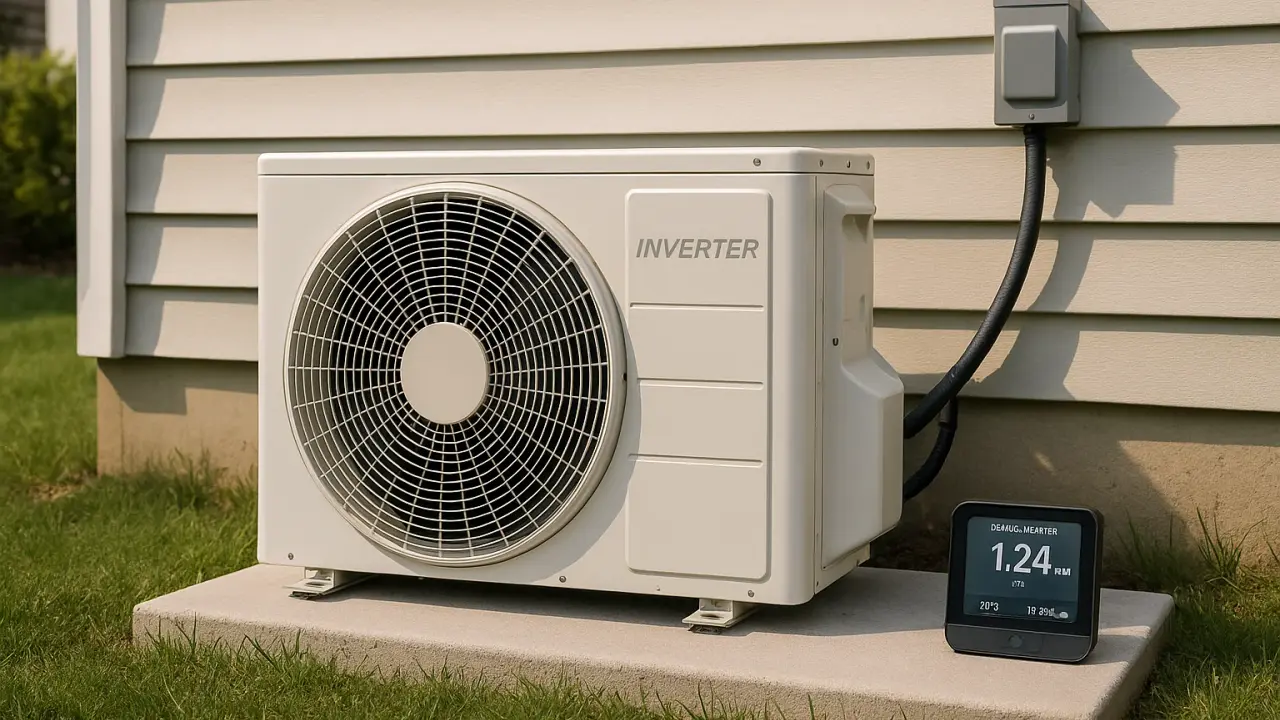
For many Oklahoma homes, yes. Our winters are mostly mild, which is where heat pumps shine. An inverter heat pump also handles our hot, humid summers with steady, quiet cooling. Whether it pays off for you depends on your current system, your electric and gas rates, your ductwork and how long you plan to stay.
The credit was a nice bonus, but it was never the main reason to choose a system. Correct sizing, good installation and the right equipment for your home matter more.
A Few Cautions
- Laws can change again. Congress can create, extend or end credits. A tax professional will know the current rules.
- Be careful with old information. Many websites still describe the credit as running through 2032. That was true before 2025, but not now.
- Don't rely on a contractor for tax advice. That includes us. We can give you the equipment details and paperwork, but your tax preparer should decide what you can claim.
Let's Find the Right System for Your Budget
If you are thinking about a heat pump or a full HVAC replacement, we'll give you a free estimate, run a Manual J load calculation and show you options that fit your home in Sapulpa, Tulsa or nearby. Book online or call (918) 370-1260.